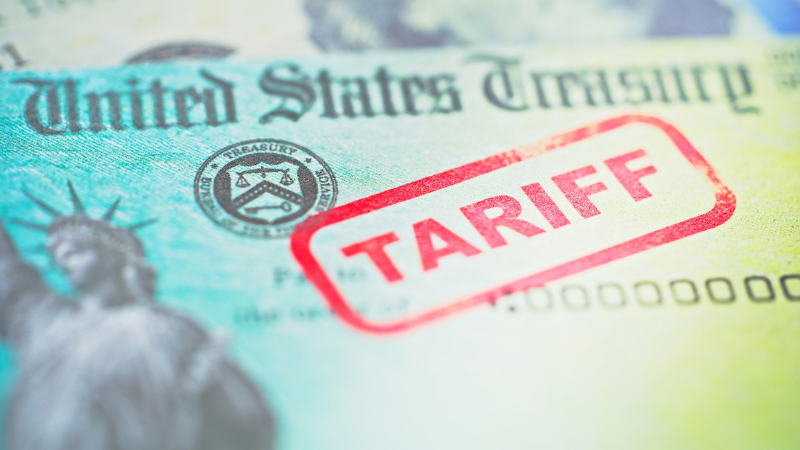
CHICAGO, May 29, 2026 — The refund of $166 billion illegally collected under President Donald Trump’s first round of tariffs is not going well.
For one thing, the administration has acknowledged that it miscalculated how much money will be disbursed to the first wave of importers who applied for a refund.
In a document filed with the U.S. Court of International Trade, the federal body overseeing the reimbursement, U.S. Customs and Border Protection (CBP) said it had misstated the amount by about $10 billion, or roughly 30%. The CBP initially said it had fielded applications for a total of $35.5 billion in refunds, but restated the tally at $25 billion after discovering a computing error. It revealed that about $20.6 billion has been paid out in total since April 1, when the CBP began accepting refund applications.
The CBP is also lowering its estimate of how much money will eventually be paid out. It now says the tally could fall as low as $127 billion, an apparent recalculation of how many small importers are unlikely or unable to navigate the refund process.
Initially, the Administration had estimated that $149 billion would be reimbursed. The Trade Court, in turn, has held to the contention that all $166 billion collected through the tariffs should be returned to the parties that ponied up the money.
The White House has made no secret of its opposition to refunding the collected money. “To people who hate us, to countries that ripped us off for years, I’ve got to give them back $149 billion,” Trump remarked to The Independent, an international newspaper.
He has blasted the U.S. Supreme Court for ruling that the president does not have the authority under the International Emergency Executive Powers Act of 1977 (IEEP) to impose the tariffs, which Trump started doing on April 1. He flatly stated that the decision “pissed me off,” and barked that he was ashamed of the court’s reasoning.
The Supreme Court’s decision in February upheld the finding of a federal appeals court, which in turn ratified the Trade Court’s initial finding that the president exceeded his powers in unilaterally imposing the tariffs.
The Trade Court has scheduled a meeting for next month with the head of the CPB, Rodney S. Scott, to discuss compliance with the court’s reimbursement orders. The judicial body has shown that it expects the refund process to stick to the tight schedule set by the court several weeks ago.
Still unaddressed is whether the refunds should trickle down to consumers who paid higher prices for imports because of the tariffs. Trump has maintained that the fees were paid almost exclusively by exporters in other nations, but The Tax Foundation, a nonpartisan tax watchdog group, has estimated that the import duties cost U.S. households an average of $700 each.
Walmart said Wednesday that the $2.4 billion it’s slated to receive in refunds will be wholly used to bring down prices. Similar pledges have been given by Costco, FedEx and UPS.