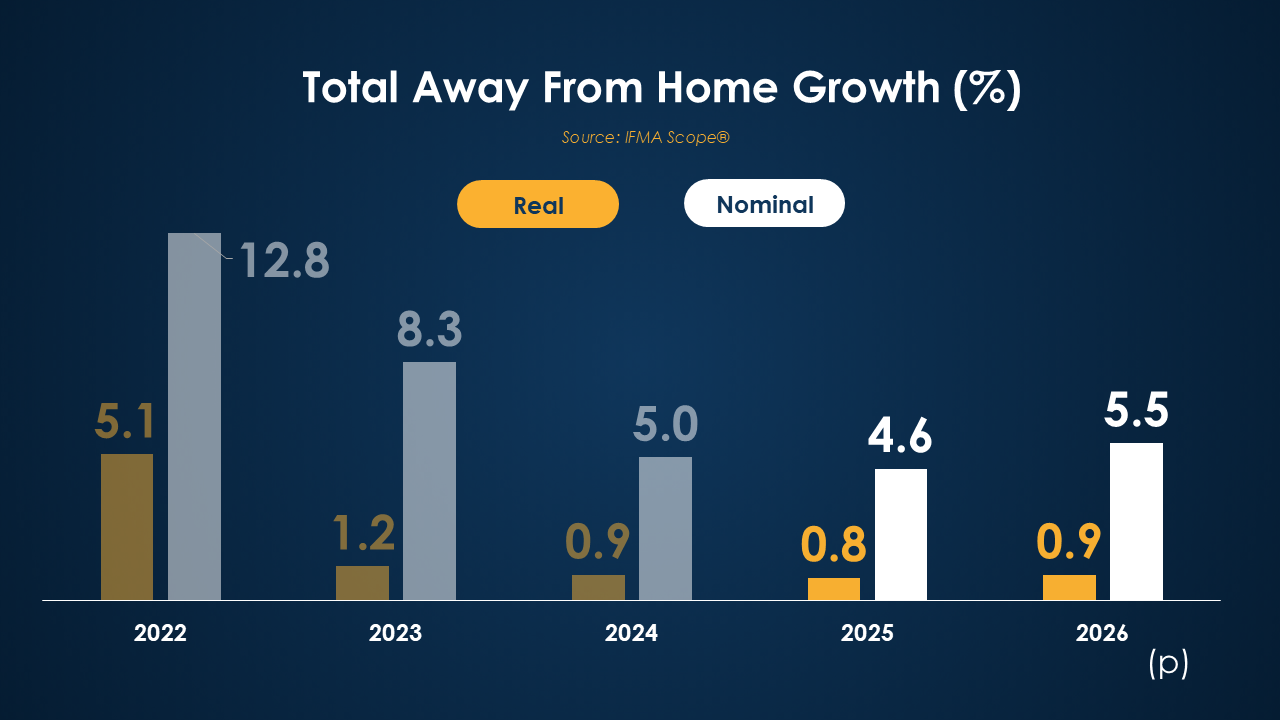
CHICAGO, March 18, 2026 - Sales growth for the food-away-from-home industry should accelerate moderately in 2026 from last year’s 0.8% gain, but the war in the Middle East could turn that projection into wishful thinking, according to a business update aired at COEX.
“We still have no idea what’s about to happen,” explained Charlie McConnell, vice president of Industry Insights, Education & Research for IFMA The Food Away from Home Association.
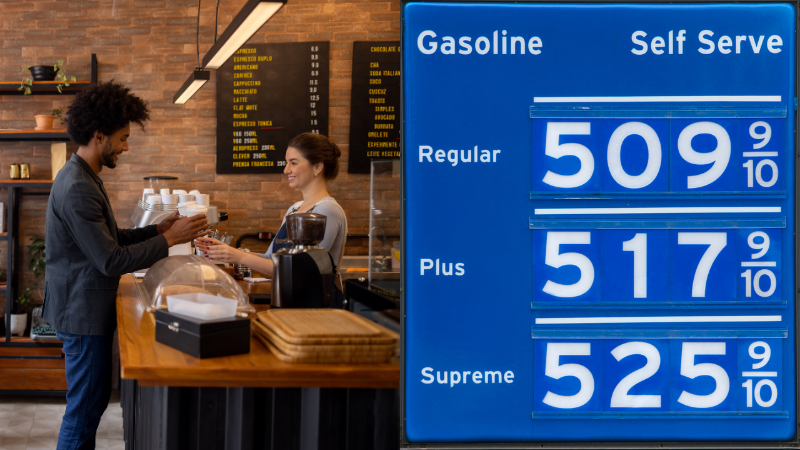
The key variable, he explained in updating the sales forecast originally issued by the Association in August, is how the ongoing war with Iran will affect gasoline prices.
"We could be looking at $6-plus a gallon,” McConnell said on the first full day of COEX. "If we get to that level, there's going to be a real pullback.”
History has shown that consumers tend to rein in their spending on food prepared away from home when they see a leap in the cost of tanking up their cars and pickups. With the price of crude oil already soaring, some experts have predicted that gasoline prices could hit a new all-time high of $7 a gallon. The current record is the $5-a-gallon consumers saw at the pump right after Russia invaded Ukraine in 2022.
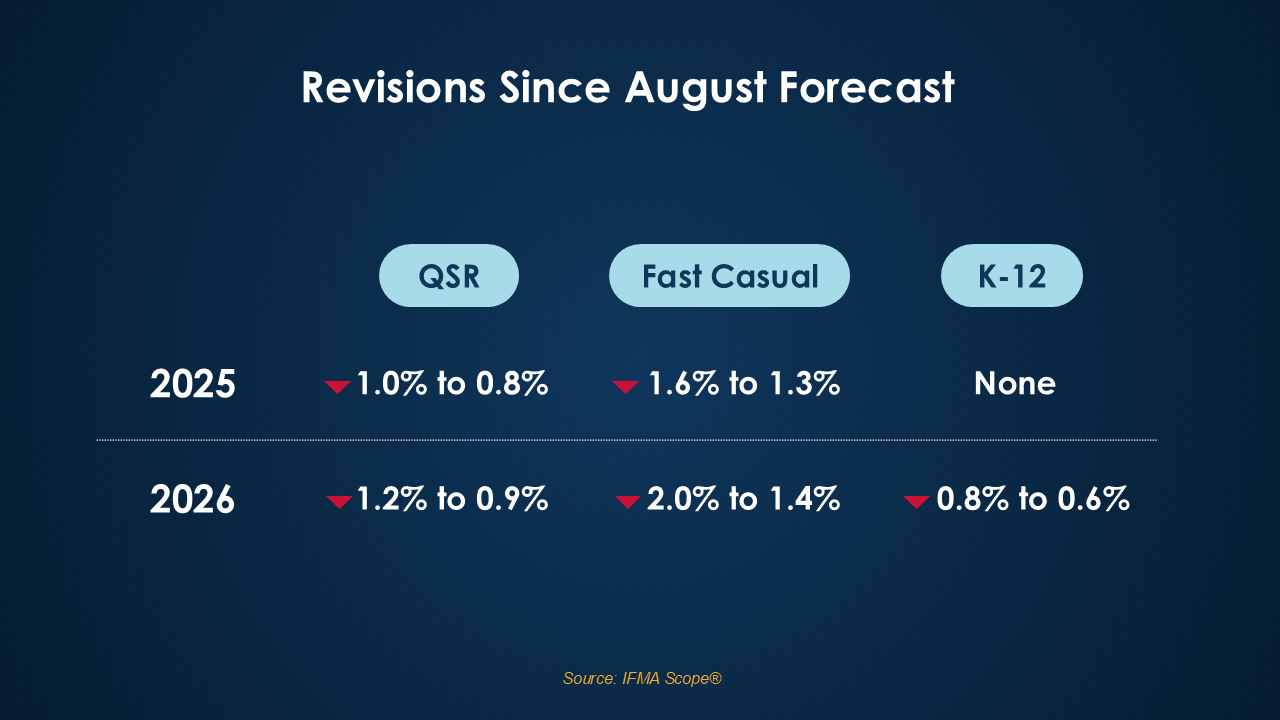
The damage would likely be most severe for quick-service and fast-casual restaurants, McConnell observed. In a segment-by-segment update of the 2026 sales forecasts originally released by the Association in August, the former US Foods director said the total sales for fast casuals are now expected to grow by 1.4%, down from an original forecast of 2%.
The sales projection for quick-service restaurants (QSRs) was lowered to an increase of 0.9%, from 1.2%.
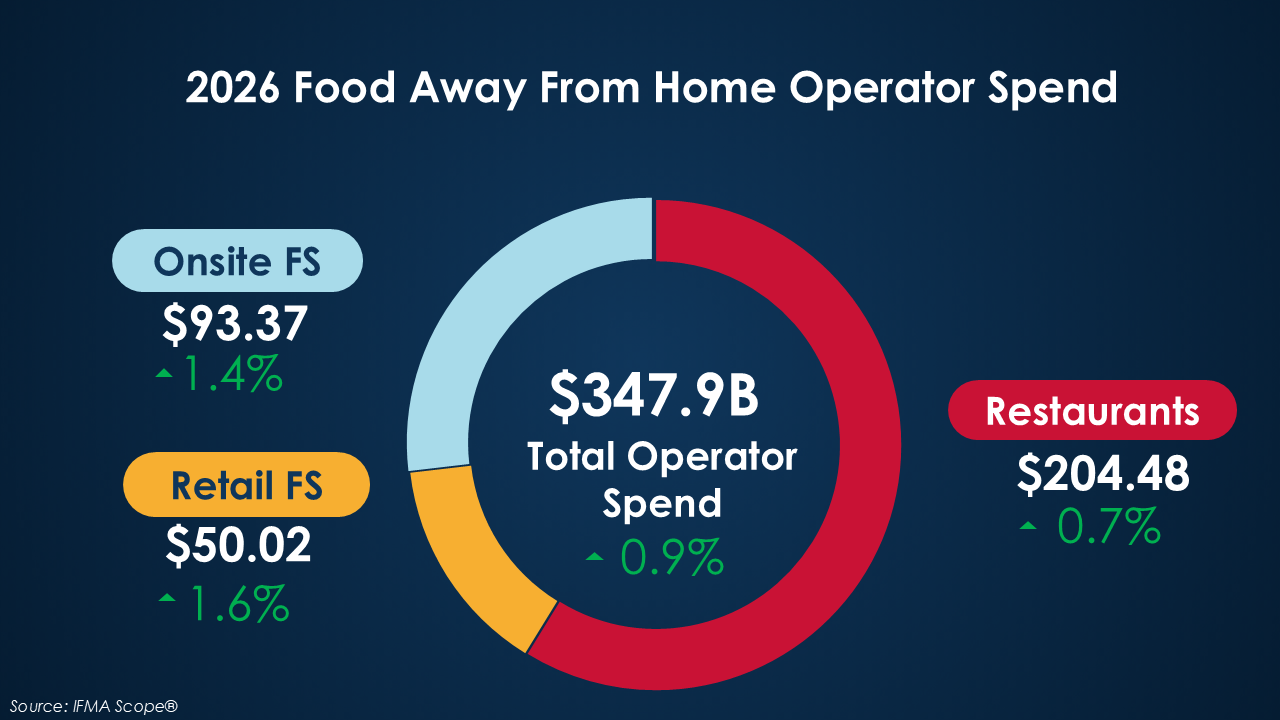
Nevertheless, McConnell noted, those limited-service segments will continue to drive the growth of the whole restaurant market because of their size. Even with a slowdown in same-store sales, unit openings will be crucial in raising the sales of all restaurants by 0.7% in 2026, compared to the 0.5% increase clocked last year.
The Association’s revised forecast calls for year-over-year slowdowns in the growth of school foodservice revenues (1.6% in 2026, compared with 2025’s 1.8% increase). Sales growth in the business and industry sector should remain essentially flat, with an increase of 0.8%.
Declines in sales were projected for mid-scale restaurants, also known as family-dining places (-0.7%), college and university foodservices (-0.5%), and long-term care dining rooms (-0.3%).
Overall, total U.S. food-away-from-home sales should rise by 0.9%, McConnell revealed. But maintaining margins could be even tougher this year because of inflation in food and beverage costs. Operators will feel pressure to raise menu prices, but consumers have shown considerable resistance to further increases.
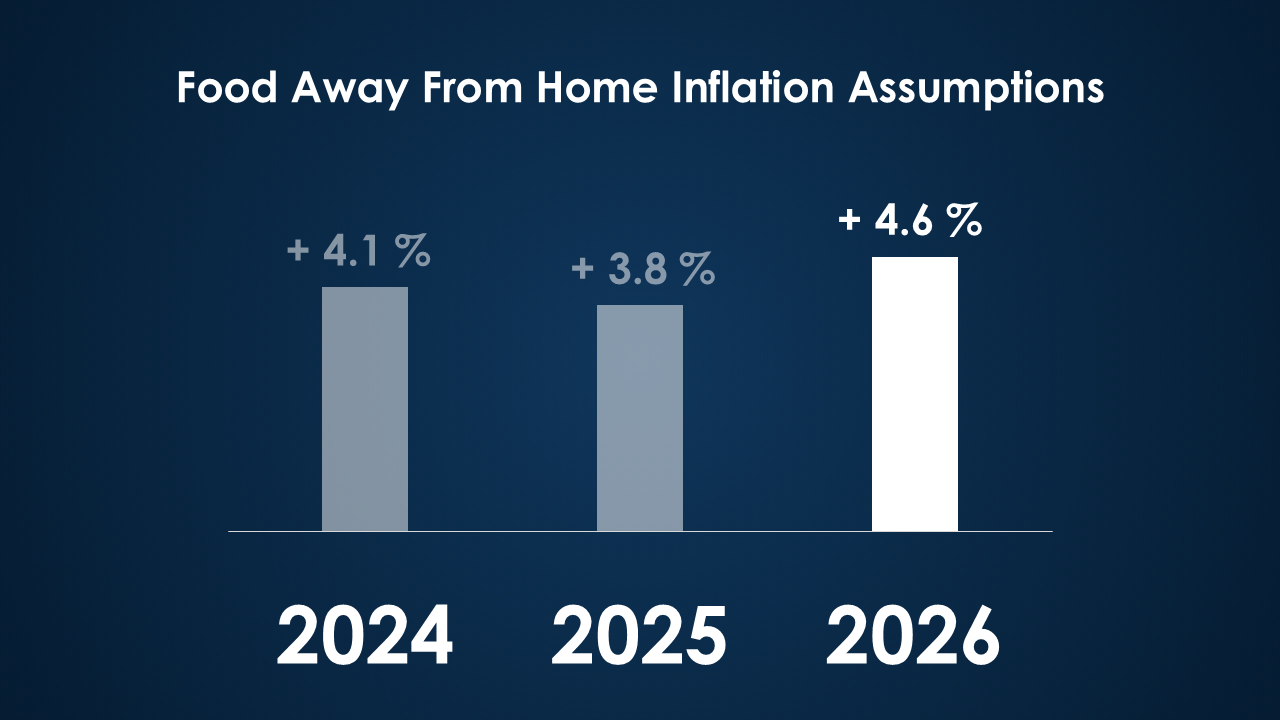
"We are expecting inflation to actually be higher for food away from home in 2026 than it was in 2025,” he observed. McConnell pegged the inflation rate for the industry at 4.6%, compared with last year’s 4.1% gait. He called the projection “a substantial number, and one that we have to look at."
The projections he shared at COEX are available to members of IFMA The Food Away from Home Association via IFMA Scope, a sales-tracking tool posted in a special section of the non-profit's website, foodaway.org.
Other variables
In addition to gas prices, several forces from outside of the industry could affect its fortunes in 2026, according to McConnell.
One of those variables, he continued, is the use of GLP-1 appetite suppressants. He cited proprietary Association research that found 11% of the U.S. adult population is either using or has used the weight-loss drugs. Another 22% are interested in giving the medications a try.
McConnell noted that those numbers could soar in 2026 because of Big Pharma’s introduction of GLP-1s in pill form.
“The major inhibitors to using the drugs is price and the fact that [the form of application] was a needle,” he continued. “So it's now coming out in pill form, and we expect the prices to go down, which could open consumers to using these drugs on a more widespread basis." Right now, he explained, usage skews toward higher income groups because of the cost of injections.
The other variable that could affect food-away-from-home sales is the Trump Administration’s tariff policies, said McConnell. Of particular concern are the import duties on foods imported from Mexico and Canada.
The White House had exempted those essential food-away-from-home supplies from his original tariffs, but those duties have been replaced by 10% duties on virtually all goods shipped into the U.S. As McConnell noted, the National Restaurant Association is pushing to have the exemption extended to the new tariff policy.
COEX is a three-day conference for all sectors of the food-away-from-home business, including food manufacturers, suppliers, distributors, and operators from every channel. It is presented annually by IFMA The Food Away from Home Association.
Next year’s COEX will be held March 7-9 in Orlando, Fla.
As Managing Editor for IFMA The Food Away from Home Association, Romeo is responsible for generating the group's news and feature content. He brings more than 40 years of experience in covering restaurants to the position.